Between ages two and six, a child’s brain makes more neural connections than at any other point in a human lifetime.
Most preschools in Baner know this fact. Very few build their operations around what it means.
It means the question is not what to teach children at age 3 or 4 or 5. It is what kind of environment allows the brain’s natural development to happen at its own pace, in its own sequence, without being forced into a standardised timeline that was never designed for any individual child.
EidosKids PreSchool & DayCare was built to answer that question. Not in a mission statement. In daily practice, with every child, in every room.
Between ages 2 and 6, the human brain is constructing the architecture that everything else will be built on. Neural pathways are forming at extraordinary rates. The prefrontal cortex – responsible for planning, self-regulation and abstract thinking – is in active development. The social brain is mapping its first experiences of peer interaction. The emotional brain is building its first regulatory strategies.
This is not a metaphor. It is measurable neuroscience. And it has specific implications for what children need from the adults and environments around them during these years:

Every child moves through developmental milestones in the same broad sequence. Not every child moves through them on the same calendar timeline. A child who is not reading at age 5 is not behind. They may be building the phonological awareness, vocabulary and fine motor control that will make reading permanent when it emerges at 5 and a half.
Preschools that measure success by how early a child reads, how quickly they learn to write their name or how many numbers they can recite are measuring the wrong things. They are producing surface performance at the expense of the deep foundations that performance depends on.
EidosKids PreSchool & DayCare does not measure success against a standardised calendar. Every child’s developmental trajectory is tracked individually and every decision about what that child needs next is made from that specific understanding.
Play-based learning is the most used and least understood phrase in early childhood education in Pune. Every preschool in Baner and across the city describes itself as play-based. Very few are.
Free play is children doing whatever they choose with whatever is available. It has developmental value. It is not the same as play-based learning.
Play-based learning is a deliberate approach in which the environment, the materials and the educator’s role are all designed to make specific learning outcomes inevitable through children’s natural drive to investigate, build and make sense of the world.
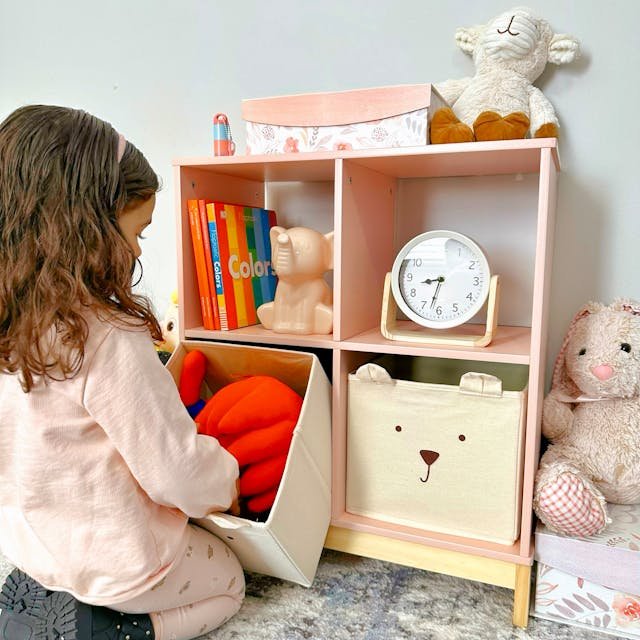
The educator’s role in play-based learning is active and skilled. They observe what each child is doing and why. They introduce materials or provocations that extend the play in developmentally productive directions. They ask questions that deepen thinking without directing it. They know when to step in and when to step back.
Play-Based Learning vs Free Play vs Direct Instruction
FREE PLAY: Child-directed, open-ended, unstructured. Developmental value: creativity, self-regulation, social negotiation. Limited: no educator design or intentional extension.
DIRECT INSTRUCTION: Educator-directed, structured, explicit. Developmental value: knowledge transfer for specific content. Limited: passive reception, limited intrinsic motivation, developmentally inappropriate before age 6-7 for most content.
PLAY-BASED LEARNING (EidosKids PreSchool & DayCare): Child-driven within an intentionally designed environment. Educator actively observes, extends and deepens without directing. Developmental value: all domains simultaneously, intrinsically motivated, developmentally matched, deep learning that transfers across contexts.
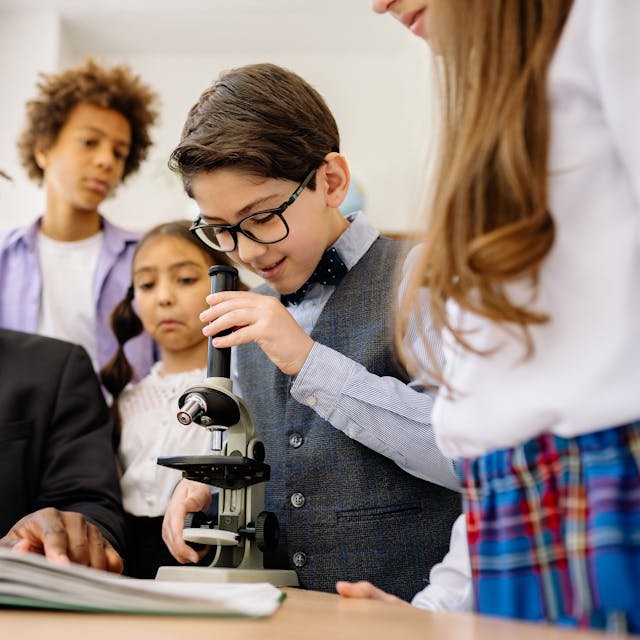
A group of four-year-olds at EidosKids PreSchool & DayCare Junior KG spends three days investigating why boats float. They hypothesise. They build. They test. They fail, revise and try again. By Friday, they are presenting findings to visiting parents.
In those three days they have built scientific reasoning, mathematical thinking, fine motor skills, frustration tolerance, collaborative negotiation and public speaking. Not because those were the lesson objectives. Because the environment was designed to make those outcomes inevitable through the children’s own investigation.
That is play-based learning in practice. The play is real. The learning is deliberate.
These are not aspirational values written for a prospectus. They are operational requirements that shape what happens at EidosKids PreSchool & DayCare every day, across every programme and every age group.
At EidosKids PreSchool & DayCare, educators develop deep, current knowledge of each child’s developmental trajectory through ongoing observation across cognitive, social, emotional and physical domains. This is not an end-of-term assessment. It is the daily knowledge that changes how each child’s environment is shaped.
The distinction matters. Assessments produce a score. Continuous understanding produces a responsive plan. At EidosKids PreSchool & DayCare, what a child experiences on a Tuesday is different from what they experienced on Monday if something in their profile has shifted overnight. The programme responds. It does not wait for the next report card.
The physical environment at EidosKids PreSchool & DayCare is not fixed. It is designed to be adjusted as children’s capabilities and interests develop. The materials in a room at the start of the Nursery year are not the same as the materials in that room at the end of it. The provocations shift as children’s questions shift.
This is intentional design, not improvisation. Every change to the environment is grounded in the developmental tracking data that educators are continuously gathering. The space is a teaching tool that is always current.
Children at EidosKids PreSchool & DayCare learn through genuine investigation. Their own questions drive projects. Their own interests shape the direction of exploration. The learning embedded in those investigations is real, deep and transferable – because it emerged from authentic curiosity rather than from a curriculum requirement.
This is harder to design than a lesson plan. It requires educators who can read what a child is genuinely interested in, who can build an environment around that interest and who can sustain it across multiple days without taking it over.
Brain development during the 2-to-6-year window requires specific nutrients: omega-3 fatty acids for neural connectivity, iron for cognitive function, zinc for immune protection during intensive growth, B vitamins for energy metabolism and quality protein for the structural building of neural tissue.
Packaged snacks, processed food and reheated meals do not reliably provide these. EidosKids PreSchool & DayCare prepares every meal fresh in its own kitchen from quality ingredients, every day, for every age group. This is a developmental decision, not a wellness trend. Nutrition and brain development are the same conversation.
Family Partnership: Parents as Collaborators, Not Observers
At EidosKids PreSchool & DayCare, parents are not recipients of end-of-term reports. They are active partners in their child’s developmental journey.
EidosKids PreSchool & DayCare operates on a single all-inclusive fee. There are no hidden costs, no surprise mid-year requests and no optional extras that turn out to be quietly expected.
| WHAT YOUR FEE COVERS | WHAT YOU WILL NEVER PAY EXTRA FOR |
|---|---|
|
All learning materials and books
School uniform
Freshly prepared organic meals and snacks daily
All activities, outings and field trips
Individual developmental tracking and parent updates
Parent workshops and family events
Ongoing developmental support throughout the year
|
Separate meal charges at any point
Extra costs for project materials mid-year
Surprise fee requests for events or activities
Premium tiers for developmental support
Additional charges for homework or enrichment
|
Contact EidosKids directly for current fee details: +91-88060 06699 or info@eidoskids.com. Fees are reviewed annually and quoted transparently at the start of each admission conversation.
The developmental approach described on this page is not a marketing framework applied to the preschool and then loosened for other programmes. It is the operating system of EidosKids PreSchool & DayCare across all ages, all care types and all year groups.
| Programme / Age Group | How the Approach Applies |
|---|---|
| First-Step Playgroup (Age 2-3) | Gradual separation support, sensory exploration, language immersion – no instruction, only responsive care |
| Nursery (Age 3-4) | Secure attachment building, social navigation coaching, emotional vocabulary development, physical confidence |
| Junior KG (Age 4-5) | Extended project work, pre-literacy through meaning, mathematical thinking through investigation |
| Senior KG (Age 5-6) | Differentiated literacy, number sense, school transition skills – play-based core maintained throughout |
| Full-Day Daycare (6 months-12) | Same developmental standards, same nutrition, same no-screen policy – across all ages in daycare |
| After-School Care (6-12 years) | Responsive afternoon programme: homework support, enrichment, physical activity – no screens, organic meals |
The EidosKids PreSchool & DayCare developmental approach is not geography-specific. It is what every child between ages 2 and 6 needs, regardless of where they live. Children from Baner, Balewadi, Wakad, Aundh, Pashan, Sus Road, Pimple Saudagar, Hinjewadi and Pimpri-Chinchwad all attend EidosKids.
The main Baner road location makes the commute manageable from across the PCMC and Pune catchment. If you are considering EidosKids from Pimpri-Chinchwad or from the Hinjewadi corridor, contact the admissions team to discuss practical logistics before making your decision.
A: Play-based learning is an approach in which the environment, materials and educator roles are intentionally designed so that children learn through their natural drive to investigate, build and explore – rather than through direct instruction from a teacher. It is different from a regular preschool curriculum in that children’s own questions and interests drive the direction of activity, and the educator’s role is to observe, extend and deepen that investigation rather than to deliver pre-planned lessons. At EidosKids PreSchool & DayCare in Baner, Pune, play-based learning is not free play. It is a structured approach with specific developmental outcomes that are tracked continuously for each child.
A: No. EidosKids does not use worksheets, phonics drills, number practice sheets or any form of direct instruction as the primary mode of learning for any age group up to Senior KG. The developmental research is clear that structured academic instruction is not developmentally appropriate before age 6-7 for most children, and that pushing it earlier produces surface performance at the expense of the deeper cognitive and social foundations that academic success actually requires. In Senior KG, structured elements are introduced gradually and in developmentally appropriate ways as children prepare for Class 1 – but the play-based core is maintained throughout.
A: EidosKids tracks each child’s development continuously across four domains: cognitive, social, emotional and physical. This is not an end-of-term assessment. Educators maintain ongoing observational knowledge of each child’s current developmental position and adjust the environment and activities accordingly. Parents receive specific updates about their actual child – not generic milestone reports. The frequency and format of updates are discussed at enrolment. Parents can also raise developmental questions at any point through the school’s open communication policy.
A: The EidosKids approach prepares children for Class 1 entry across CBSE, ICSE and Cambridge boards by building the cognitive foundations – executive function, pre-literacy, number sense and scientific thinking – alongside the social-emotional and behavioural readiness that every board demands. Children who enter Class 1 from EidosKids have spent three years building these foundations through genuine engagement, not surface-level drilling. They arrive ready to learn, able to manage frustration, capable of following multi-step instructions and genuinely excited about school – the combination that predicts success through primary education, not just in the first week.
A: Yes. The EidosKids developmental approach is the same for all children regardless of where they live. Families from Pimpri-Chinchwad, Wakad, Aundh, Balewadi, Pashan, Sus Road, Hinjewadi and across the PCMC area attend EidosKids at the Baner Road campus. The main road location and after-school safe-pickup service make the logistics manageable for families from across this catchment, including those working in the Hinjewadi IT corridor. Contact EidosKids at +91-75175 20606 to discuss your family’s specific situation and practical arrangements.
Best Preschool & Daycare in Baner. Empowering kids through innovative, play-based holistic learning.