Two-year-olds are not small three-year-olds.
They are in the middle of something genuinely different.
Between ages 2 and 3, a child’s brain adds vocabulary at a rate that will never happen again. Their sense of self is forming for the first time. The drive for independence is intense and frequently exhausting for everyone involved. And the ability to separate from the person they love most is still actively developing.
Most playgroups in Pune treat two-year-olds as early preschoolers who need a bit more time. The EidosKids First-Step Playgroup is built around what two-year-olds actually are.
That means no rushed goodbyes at drop-off. No forced circle time. No worksheets. Just a warm, consistent environment that earns your child’s trust before it asks anything of them.
At age 2, the brain is doing several things at once that it will never do again at the same speed or intensity. Understanding what those things are is the reason the EidosKids First-Step Playgroup exists as a distinct programme.
What Is Happening in a Two-Year-Old’s Brain
A standard Pune playgroup runs a shortened version of the Nursery programme: structured activities, a daily schedule and the expectation that children will participate, follow instructions and eventually separate from their parents on the institution’s timeline.
For a three-year-old, this is just about appropriate. For a two-year-old, it misses the point entirely. A two-year-old does not need a programme. They need a relationship with a consistent, warm, responsive adult in a space that is safe enough to explore and interesting enough to want to.
That is what the EidosKids First-Step Playgroup provides. It is not a junior preschool. It is a purpose-built developmental environment for the specific age group that needs it most.
Why Your Two-Year-Old’s Clinging at Drop-Off Is the Healthiest Sign Possible
The parent who stands outside the gate listening to their two-year-old cry is doing exactly the right thing. So is the child.
A toddler who protests loudly at separation from their primary caregiver has formed a secure, healthy attachment. That attachment is the foundation of every positive relationship they will ever form. It is not the problem. The question is how the playgroup handles the process of building a secondary secure base – the environment and the key adult who will earn the child’s trust alongside the parent.
At EidosKids, we do not manage separation anxiety. We support the developmental process it is part of.
The first two weeks at EidosKids First-Step Playgroup follow a specific attachment-building protocol:
Every element of the EidosKids First-Step Playgroup is chosen for a specific developmental reason. Nothing is in the programme because it looks good to parents. Everything is in it because it is what a two-year-old’s brain needs.
Language Development: How EidosKids Supports the Vocabulary Explosion at Age 2
The most powerful thing an adult can do for a two-year-old’s language development is not teach them words. It is narrate the world around them in rich, responsive, conversational language that the child can absorb and eventually produce.
At EidosKids, language immersion is woven through every moment of the day:
By the time a child completes the EidosKids Playgroup year, the vocabulary gap between them and children who spent that year in a screen-heavy environment is measurable and lasting.
Sensory Play and Physical Exploration: What a Two-Year-Old’s Brain Actually Needs
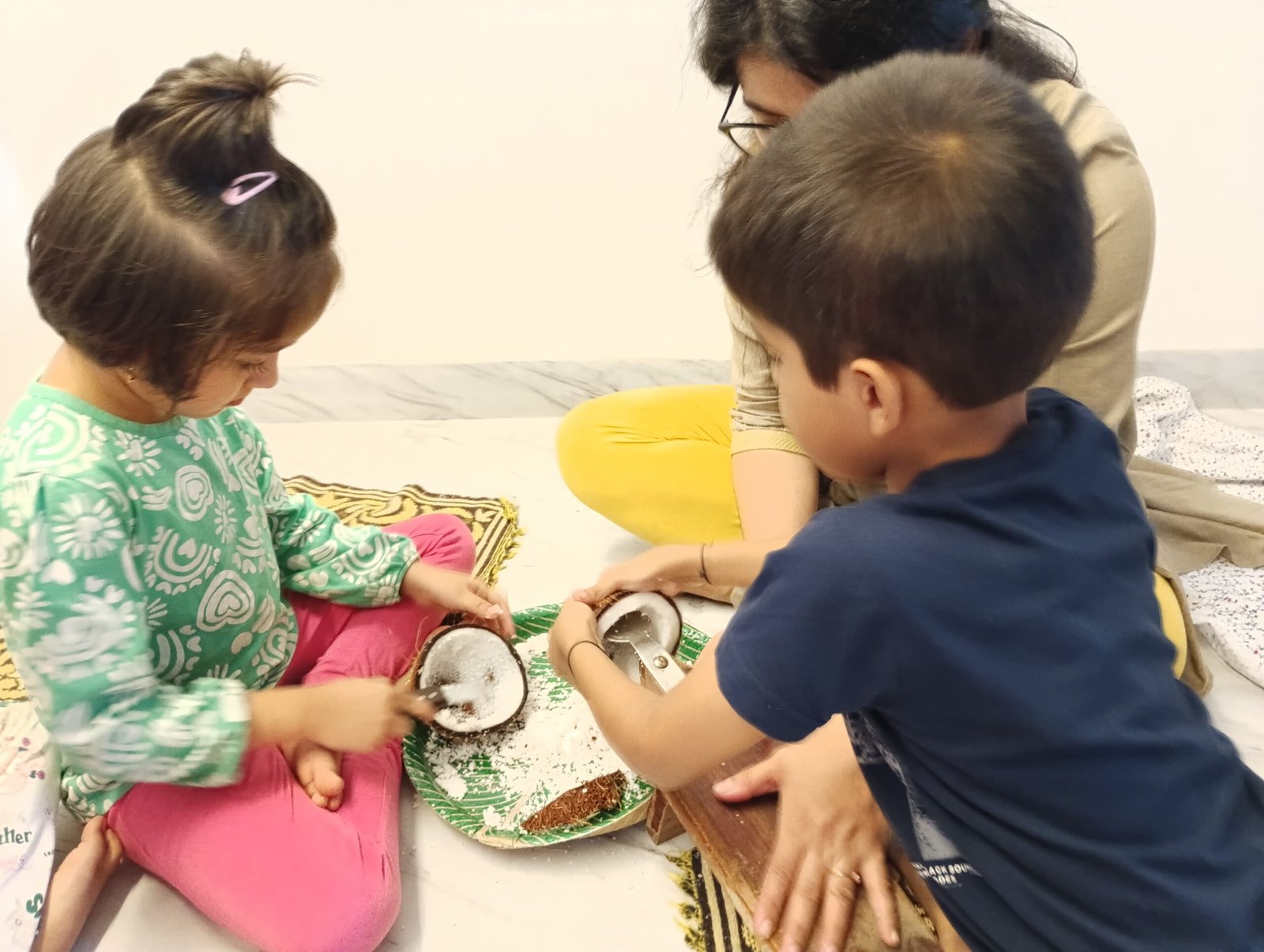
A two-year-old’s primary learning organ is their body. The neural pathways built through direct, physical interaction with the real world – touching, smelling, building, pouring, climbing and squeezing – are more durable and more developmentally productive than any screen-based or instruction-led input at this age.
The EidosKids playgroup environment is designed around this:
Social Awareness: First Experiences with Other Children Done Without Pressure
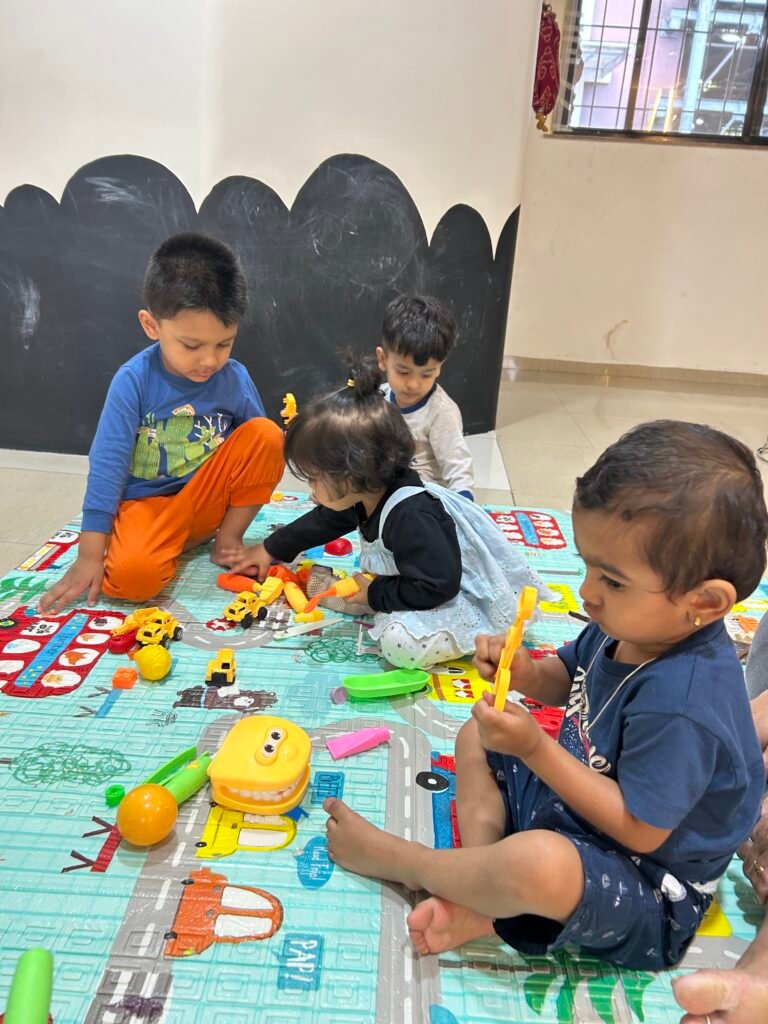
Two-year-olds are not yet capable of cooperative play. They engage in parallel play – playing near other children, watching them, occasionally interacting briefly. This is exactly right for their developmental stage.
The EidosKids First-Step Playgroup supports this first social awareness without rushing it toward cooperation or sharing that the child’s brain is not yet built for. Educators coach social moments as they arise: naming what is happening, offering language for the interaction and supporting resolution when conflicts occur.
Forced sharing and mandatory group participation are not part of the EidosKids playgroup. Authentic social moments that emerge from real play are.
Organic Nutrition at the Playgroup Stage: Why Meals Matter More at Age 2 Than Any Other
Between ages 2 and 3, a child’s brain is growing more rapidly than it will ever grow again. The nutrients that support that growth – omega-3 fatty acids, iron, zinc, B vitamins and quality protein – come from real food prepared fresh, not from packaged toddler snacks or reheated convenience food.
What a Child Gains in the Playgroup Year That Nursery Cannot Build from Scratch
Parents who are deciding whether to start at Playgroup or jump straight to Nursery at age 3 are often thinking about cost and time. The developmental question is different.
A child who arrives at Nursery having completed the EidosKids First-Step Playgroup brings something that cannot be replicated in the Nursery year:
What the Playgroup Year Builds – That Nursery Depends On
What the Playgroup Year Builds – That Nursery Depends On
A secure secondary attachment to the EidosKids environment – the child already knows this place is safe. Nursery can begin from there instead of spending weeks building it.
A working emotional vocabulary – the child can name frustration, disappointment and excitement. Nursery educators are coaching social skills, not managing meltdowns.
Established separation confidence – drop-off on the first day of Nursery is not a trauma.
It is a familiar process from a familiar building with familiar adults.
A rich vocabulary foundation – the language exposure of the Playgroup year means pre-literacy and comprehension in Nursery happen faster and more durably.
Peer awareness without anxiety – the child is comfortable around other children,even if cooperation is still developing. Social learning in Nursery can start higher.
The EidosKids First-Step Playgroup accepts children aged 2 to 3 – children who are 2 years old at the start of the academic year. Admissions are accepted throughout the year, subject to available places.
The admission process follows the same six steps as all EidosKids programmes: campus visit, discussion, programme recommendation, enrolment, orientation and gradual entry. The orientation and gradual entry steps are particularly important at the Playgroup stage and are never rushed.
Contact the admissions team to schedule a campus visit: +91 88060 06699 or info@eidoskids.com.
Is the EidosKids Playgroup Accessible from Wakad, Aundh and Pimpri-Chinchwad?
Yes. EidosKids First-Step Playgroup is on the main Baner road, accessible from Wakad, Aundh, Balewadi, Pashan, Sus Road and the Pimpri-Chinchwad area via the Baner link road. Families from Hinjewadi use the programme regularly given the main road location and the flexible morning drop-off timing.
For PCMC families looking for a toddler playgroup that applies genuine developmental standards, serves organic meals and maintains a strict no-screen policy, EidosKids is accessible without navigating internal residential roads. Call +91 88060 06699 to discuss logistics from your specific location.
A: The EidosKids First-Step Playgroup in Baner, Pune is for children aged 2 to 3. It is a developmental programme that builds secure attachment, language development, social awareness and physical confidence through sensory-rich play, consistent caregiving and gradual separation support. There are no worksheets, no structured academic activities and no screen-based learning. Fresh organic meals are prepared daily. The programme is designed as the developmental foundation before the Nursery year, not as a junior version of it.
A: EidosKids treats separation anxiety in two and three-year-olds as a healthy developmental signal, not a problem to be managed quickly. Each child is assigned a consistent key adult from day one. Drop-off routines are kept short, warm and identical each morning. Sessions begin shorter for new children and build gradually. Parents are never rushed out. Most children who struggle significantly at drop-off in the first week are separating confidently by the end of the second week when the attachment-building process is handled correctly.
A: A child who completes the EidosKids First-Step Playgroup arrives at Nursery with secure attachment to the environment, an established emotional vocabulary, separation confidence and a rich vocabulary base. These are the foundations Nursery depends on. Children who start Nursery directly at age 3 without a playgroup year typically spend the first six to eight weeks building those foundations before the Nursery programme can fully engage them. Starting at Playgroup is not required for Nursery admission at EidosKids, but the developmental advantage it creates is real and visible by mid-Nursery year.
A: Yes. EidosKids Junior KG is located on the main Baner road in Pune, accessible from Wakad, Aundh, Balewadi, Pashan, Sus Road and the Pimpri-Chinchwad area. The school runs a safe-pickup service from the main road bus stop and auto point, making the daily commute practical for families based in the Hinjewadi IT corridor. Contact EidosKids at +91 88060 06699 or info@eidoskids.com to discuss pickup arrangements for your specific location.
A: The EidosKids First-Step Playgroup fee is all-inclusive. It covers all learning materials, school uniform, freshly prepared organic meals and snacks daily, all activities, individual developmental tracking and parent updates, and parent workshops. There are no separate meal charges, no mid-year material requests and no hidden costs. Contact EidosKids at +91 88060 06699 for current fee details. Fees are reviewed annually and disclosed in full at enrolment.
Best Preschool & Daycare in Baner. Empowering kids through innovative, play-based holistic learning.