
Table of Contents
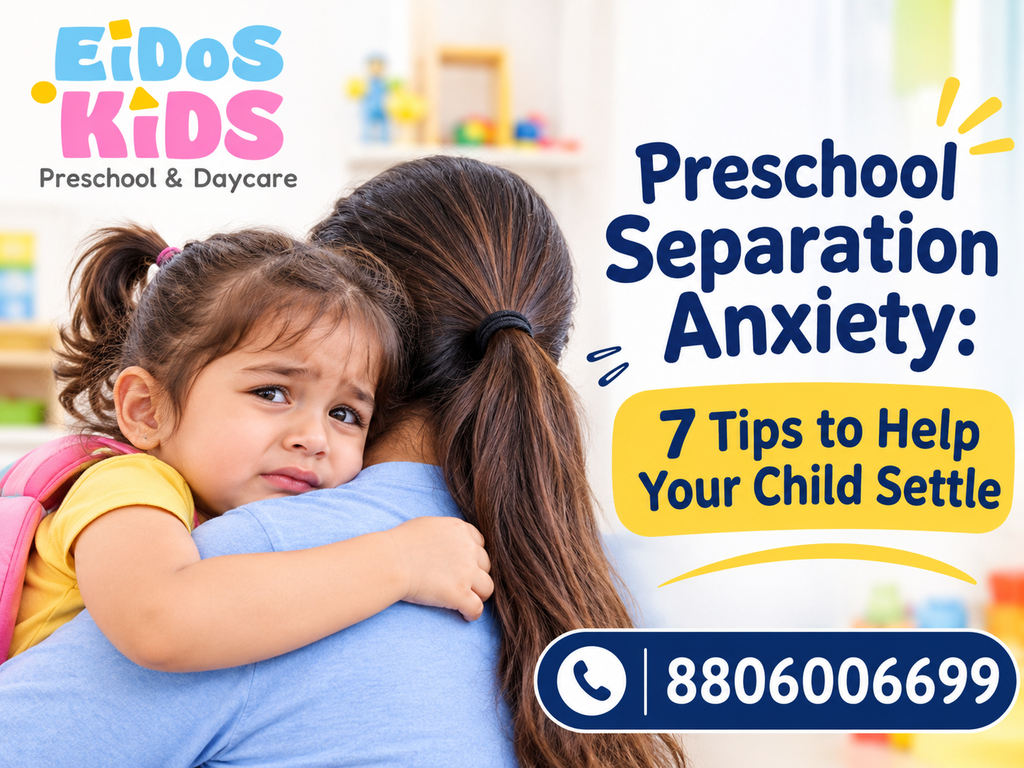
Does your child start crying as soon as you reach the preschool gate? Do they hold your hand tightly, refuse to enter the classroom or repeatedly ask when you will return?
Starting preschool is an exciting milestone, but separating from parents can feel overwhelming for young children. Many parents worry about whether their child will settle, make friends and feel comfortable in a new environment.
Preschool separation anxiety can be eased by establishing a predictable routine, practising short separations, keeping goodbyes brief, acknowledging your child’s feelings and working closely with teachers. Consistent emotional support can help children gradually feel comfortable and secure at preschool.
Understanding your child’s emotions is the first step towards making this transition easier.
What Is Preschool Separation Anxiety?
Preschool separation anxiety refers to the fear, worry or emotional distress children may experience when separating from their parents or familiar caregivers.
It is a common part of early childhood development, particularly when children enter an unfamiliar environment.
New teachers, unfamiliar faces, different routines and uncertainty about when parents will return can contribute to these feelings.
What Are the Signs of Separation Anxiety in Preschoolers?
Every child expresses separation anxiety differently. Parents may notice the following behaviours:
- Crying during preschool drop-off.
- Clinging tightly to parents.
- Refusing to enter the classroom.
- Repeatedly asking when parents will return.
- Becoming unusually quiet or withdrawn.
- Complaining of stomach discomfort before school.
- Experiencing changes in sleep patterns.
- Showing reluctance to interact with unfamiliar people.
These behaviours do not necessarily mean that your child dislikes preschool. They may simply need more time to adjust.
Why Do Children Experience Separation Anxiety at Preschool?
Young children are still developing emotional regulation, independence and confidence in unfamiliar surroundings.
For many children, preschool is their first experience of spending several hours away from home. Changes in daily routines and unfamiliar social situations can make them feel uncertain.
Choosing a supportive Preschool in Baner near Lalit Estate can help children experience a gradual transition through familiar routines, engaging activities and reassuring interactions with teachers.
How to Help Your Child Overcome Preschool Separation Anxiety: 7 Practical Tips
1. Introduce Preschool Before the First Day
Talk positively about preschool before your child begins attending. Explain what they might experience, including stories, toys, outdoor play and making new friends.
If possible, visit the preschool together beforehand. Familiarity with the surroundings may help reduce uncertainty.
2. Practise Short Separations at Home
Begin by allowing your child to spend short periods with a trusted family member or caregiver.
Gradually increase the separation time as your child becomes comfortable. Always return when promised to help build trust and reassurance.
3. Create a Predictable Morning Routine
Children often feel more secure when they know what will happen next.
Maintain consistent timings for waking up, breakfast, getting dressed and leaving for preschool. Avoid rushing whenever possible.
For working parents, a structured Daycare in Baner can also provide opportunities for children to experience predictable routines, supervised play and consistent caregiver interactions.
4. Keep Goodbyes Short and Reassuring
Long or repeated goodbyes may make separation more difficult.
Create a simple goodbye ritual, such as a hug, high-five or special wave.
Try saying: “Have fun playing with your friends. I will come back after lunch.”
Avoid leaving secretly, as this may increase uncertainty about when you will return.
5. Acknowledge Your Child’s Feelings
Instead of saying, “Stop crying, there is nothing to worry about,” acknowledge your child’s emotions.
Try saying: “I know you feel sad when I leave. Your teacher is here to help you, and I will come back.”
This helps children understand that their feelings are recognised and accepted.
6. Work Closely With Preschool Teachers
Share information about your child’s interests, comfort items, daily habits and emotional needs with their teachers.
Regular communication between parents and educators can help identify which activities or approaches make the child feel more comfortable.
7. Encourage Independence Through Everyday Activities
Allow your child to complete simple age-appropriate tasks independently, such as packing their school bag, putting away toys or choosing their clothes.
At Eidos Kids, everyday learning experiences can provide opportunities for children to practise independence, communication and social interaction.
Small achievements can gradually help children feel more confident in unfamiliar situations.
How Long Does Preschool Separation Anxiety Last?
There is no fixed timeline for children to adjust to preschool. Some children become comfortable within a few days, while others may need several weeks or longer.
The adjustment period depends on the child’s temperament, previous separation experiences, daily routine and emotional development.
Instead of comparing your child with others, look for gradual improvements, such as shorter crying periods, increased classroom participation and greater interest in preschool activities.
What Should Parents Avoid During Preschool Drop-Off?
Certain responses may unintentionally increase a child’s anxiety.
| Avoid doing this | Try this instead |
|---|---|
| Leaving without saying goodbye | Create a predictable goodbye ritual |
| Shouting or scolding | Acknowledge their feelings calmly |
| Comparing with other children | Appreciate individual progress |
| Making unrealistic promises | Explain when you will return |
| Extending goodbyes repeatedly | Keep goodbyes brief and reassuring |
Patience and consistency can help children gradually develop a sense of security.
When Should Parents Worry About Separation Anxiety?
Separation anxiety is common during early childhood. However, professional guidance may be helpful if your child:
- Experiences intense distress that persists for several weeks.
- Consistently refuses to attend preschool.
- Remains distressed throughout the school day.
- Experiences frequent physical complaints or sleep difficulties.
- Struggles to participate in everyday activities because of anxiety.
Consulting a paediatrician or child development professional can help parents understand whether additional support is necessary.
Frequently Asked Questions
Is separation anxiety normal in preschool children?
Yes, separation anxiety is common in young children, particularly when they begin attending preschool or experience changes in their daily routine.
Should I leave my child at preschool if they are crying?
A calm goodbye and support from a trusted teacher may help children settle. Work with educators to understand your child’s individual needs and adjustment progress.
Can preschool help children overcome separation anxiety?
A supportive preschool environment with consistent routines, interactive activities and reassuring teacher interactions can help children gradually develop emotional security and independence.
Does separation anxiety mean my child is not ready for preschool?
Not necessarily. Separation anxiety can occur even when children are developmentally ready for preschool. Some children simply require additional time and reassurance.
Conclusion
Preschool separation anxiety is a common experience for many young children. Understanding their emotions, maintaining predictable routines and encouraging independence can make the transition more comfortable.
At Eidos Kids , a supportive early learning environment can help children explore, build relationships and develop confidence at their own pace.
Parents from Baner, Lalit Estate, Balewadi and nearby areas can connect with the Eidos Kids team to learn more about preschool programmes and daycare facilities.